Zelda as a Writing Tool

Zelda as a Writing Tool

My last post was about tapping into a mental state to encourage an improvisational approach to writing fiction. I don’t want to give the impression that writing fiction doesn’t take a whole helluva lotta consideration of organization and presentation or forethought.

What I am proposing is that there’s some mental shorthand you can use to make story telling fundamentals a little more intuitive. I learned this through the necessity of being a borderline criminally disorganized person.

What I mean by mental shorthand is a concept you can feel and visualize in your mind in place of a quantifiable, rigid set of rules. Think of it as a nemonic device for the fundamentals.

Let’s start with narrative structure. Fiction demands you pay attention to this. It’s one of the hardest things to grok (especially after you’ve written a complete work) and it takes reading piles of books and scrutinizing their organization with the intensity of a serial killer. If you don’t know where to start, I highly recommend revisiting Shakespeare (5 Act structure) because all of his work is separated neatly into acts and because you won’t be able to understand 70% of what’s being said, you’re more likely to feel how a scene plays out instead of relying on what information is being shared.

There are far better pieces on the basic elements of a story (if you aren’t familiar with The Hero’s Journey, or The Rules of Fairy Tales, or the Act Structure give those links a read. Sorry that the fairy tale link is so crappy. Best I could do.)

So, what serves as good mental forehand for story structure? What about, say, the game design of a dungeon from The Legend of Zelda? (Nerd alert: I’ll be in the cafeteria trading rock collections if anyone wants to give me a justified ass-kicking.) There’s no denying that by any reasonable standard, The Legend of Zelda: Ocarina of Time is nearly a perfect video game. I like to use it as an example, because I’ve played through it so many times, I can mentally pass through almost every dungeon to the point that I can give somebody a pretty thorough walk through over the phone while I’m cooking dinner. Maybe your mental shorthand, or fundamental allegory, is a movie, or a painting, or a concept album. Maybe it’s a sick skate video. Maybe you’ve got it in your blood. Me? Zelda.

Let’s break down a Zelda dungeon.

  1. You enter and familiarize yourself with the atmosphere, and are given the task to complete the dungeon.
  2. You encounter enemies and puzzles of increasing difficulty
  3. You get to a point where you cannot continue without a specific tool
  4. You fight a mini-boss and receive the special item
  5. You utilize this special item to defeat and complete harder enemies and puzzles.
  6. You face and defeat the boss in an epic battle of Man v Monster
  7. The Dungeon resolves, you get a heart container and a piece of the plot is revealed

What the game designers knew is that they are driving a story through the format of game. They knew that that having the puzzles that you can’t solve without the item don’t have a place in the beginning. There needs to be build. They knew that you can’t have the mini-boss in the beginning or after the final boss battle. They knew that situations need to be developed such that the player gets better at the game before offering new challenges. they know that they have to offer rewards and they know where and when to place them. That’s what creates the story of a hero overcoming gradual conflicts.

Now let’s write a quick and dirty mystery plot with a few switcharoos.

  1. A detective is tasked with solving a murder of a senator.
  2. There are interests, I don’t know, The White House, that don’t want the case solved
  3. The detective loses a fist fight with another gumshoe
  4. Suspecting his rival for the murder, our hero follows him and learns that while he’s innocent in the murder, he’d been hired by The White House to jam up his investigation.
  5. Our hero throws this information in the President’s face, threatening to contact the newspapers and the President backs off
  6. Free from misdirection, the detective solves the murder. The Senator’s cat did it or something.
  7. The Detective leaves and contemplates the events of the story, inquiring for meaning in a bleak and cynical world.

It’s not a great story, but you can see how the beats match up to the break down of the dungeon. You can also apply this to the micro level in individual scenes to make sure that the scene stays active. I confess I’m not always on point with this, largely in part because I think it’s funny to let a scene sit awkwardly for an extra beat and have characters argue with each other before proceeding (which is still conflict, so hey).

I bring this up because making charts and lists and spreadsheets is tedious work and if you, like me, are something of an improvisationalist, then it’s a lot easier to feel out your written world in terms of something familiar and fun instead of clinical and boring.

There’s a good chance you’ll have to make a chart or timeline anyway. But that shouldn’t mean you should rob yourself of fun methods in your toolbox. Enjoying writing and producing working fiction needn’t be mutually exclusive.

Hi there! Are you here to see my wicked rock collection?
 

Writing as Improv

Writing as Improv

First, a suggestion: If you are a hopeful writer in high school or college, the absolute best advice I can give you is…

Take theater.

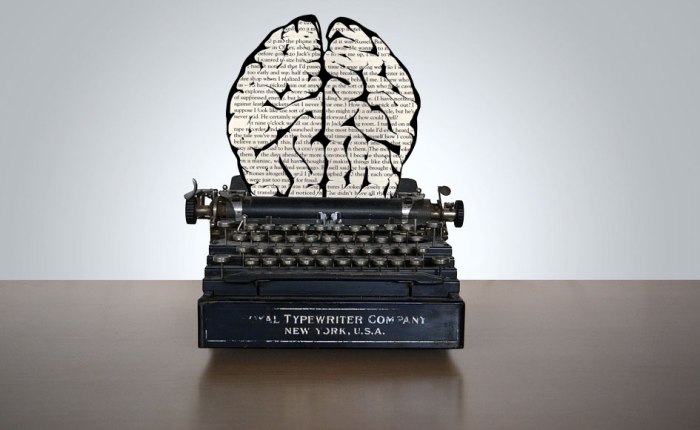
Second, an explanation: Me and my friends get together and discuss our current projects semi-regularly. Because I live in Portland, most of these friends are musicians. We got to talking recently about the concept of “flow” and what it takes to improvise musically.  It means practicing your technical skills repeatedly and then turning your brain off.

Here’s an article what happens to your brain while free-styling rap, the cut of the jib of which is:

The areas implicated in processes like organization and drive were marked by an increase in activity, while those parts responsible for close self-monitoring and editing were deactivated.

I think it boils down to trusting that one knows their technical skills are there and by tapping into one’s subconscious, that it will automatically organize itself into a song. It’s like having a dream right? The majority of us are not film directors and yet we build sets, costumes, create characters and write dialogue all while our brain is supposedly “off.”

The famous quote of comedic genius Del P. Close is “follow the fear.” Fear is the mind killer and, in art, that might actually be a good thing. It’s a way to shut out the ego and trust your own instincts.

I want to bring this discussion to a classic argument shared by writers: “To outline or wing it?” Nearly every reading I’ve gone to, this question is asked and the answer is always the same– “it’s up for debate, but I personally need to outline my own books, so I don’t lose track of yada yada yada…” But what about the other side, the “wingers”, that don’t plan ahead? Another quote to the rescue:

“Writing is like driving at night in the fog. You can only see as far as your headlights, but you can make the whole trip that way.”

Thanks, E.L. Doctorow. And I agree with him. Well, how about that I agree with both? If you’ll indulge me about my own writing process, I make a loose, looooose, outline that’s almost never more than 1-2 sentences denoting what needs to happen per scene. If I have a complicated web of relationships (such as in Muddy Sunset) I’ll spend some time figuring that out ahead of time in a notebook and set it aside. As far as the actual writing goes, I take those 1-2 sentences and then I improvise.

Authors often say that this causes the problems of 1. Creating more work later (true) and 2. is messy and inconsistent (not always true) because 3. Without a plan, you are lost (often true, but not always a bad thing).

To which I want to ask the following question: If I know I’m driving to the beach and have three hours to do so, does it really matter what road I take? Recall any family vacation and I almost guarantee you that the thing you remember most is where you stopped along the way, not the actual mind-numbing highway through Kansas (sorry, Kansas). Or you remember changing a tire, or waiting for the tow-truck, needing the bathroom 75 miles away from the nearest gas station– you remember everything that hadn’t been planned or accounted for. Not having everything in place ahead of time allows for spontaneity. I try to maintain a rule that I need to surprise myself at least one time per scene. If I, the author, am surprised, there’s a fantastic chance that the reader will be surprised as well.

Another quote, this one by Raymond Chandler, a personal hero of mine:

“The faster I write the better my output. If I’m going slow, I’m in trouble. It means I’m pushing the words instead of being pulled by them.”

This too speaks of tapping into that fugue state, and following the subconscious instinct in storytelling.  It’s about trusting what lies beneath the topsoil of your brain, that’s there’s something special under there and it’s up to you as the writer to uncover it and show it around. Maybe your tools haven’t been sharpened (it’s a lifelong game, and no one ever reaches 100% perfection) and if that’s the case and you don’t trust yourself yet (or perhaps too much) there are many viable spaces online to practice and get feedback.

So back to the beginning. Hopeful writers still in school: take drama. Participating in theater during high school helped me nearly as much as taking creative writing and standard English courses. Theater taught me…

  1. To improvise.
  2. To embrace the fear of performance.
  3. To step inside a character’s psychology, physicality.
  4. To shut my own brain off and go with “The Flow.”

These are the lessons that don’t get covered in English courses (“But what does it mean?“) or creative writing courses (“What does Raymond Carver teach us about Craft?”).

If you aren’t in school and find yourself stuck with writer’s block, perhaps try to engage the subconscious mind and participate in other disciplines: music, theater, drawing.

You might be surprised what your brain has in store for you and your story.


You can celebrate my first post by reading my first book, The Fish Fox Boys Part One. It’s about a trio of siblings bumbling around in the wasteland and you can purchase a paperback or kindle version of it herere_cover_small