Planning Your Escape

Planning Your Escape

You ask any number of readers (or gamers, or cinephiles, etc) why they read and I’ll bet you a shiny Sacagawea dollar that the number one answer is going to be “being teleported to another world.” (Popcorn flicks – “to turn my brain off for a while”; video games – “veg out and kill shit”; Netflix – “Chillll.”) Some call this “escapism.” I’m not here to judge the value of escapism, because I already know from personal experience that it’s practically necessary for the survival of my sanity. But looking at escapism from the creative perspective and the work that goes into it, there’s a few things I’ve noticed.

In writing circles, there’s a dumb phrase floating around called “World Building,” in which the writer conceptualizes the setting that their story is going to take place.

I’m pretty sure it’s a trap.

Don’t get me wrong, it’s important to understand the world you’re trying to  convey to the audience. Understanding spacial relationships within the story is important, too. Fleshing out characters, even minor ones, crucial. But I feel that writers often get stuck in this development phase and it’s tempting to stay there.

Consider HP Lovecraft, often considered the premiere cosmic-horror author, and to do this, consider all of HP Lovecraft’s annoying goddamn fans (BYE, NERDS! Don’t let the red X button hit you on the ass on your way out!). Lovecraftian nerds love to piece together an overarching mythology to Lovecraft’s work, because that’s what human beings do– we organize, label, and critique things. But if you start writing a comprehensive universe first, you’re essentially working backwards. My take is that HP built outwards (very elaborately) to satisfy the needs of the stories he was working on. From the Cthulhu Mythos wiki:

The view that there was no rigid structure is reinforced by S. T. Joshi, who stated “Lovecraft’s imaginary cosmogony was never a static system but rather a sort of aesthetic construct that remained ever adaptable to its creator’s developing personality and altering interests… [T]here was never a rigid system that might be posthumously appropriated… [T]he essence of the mythos lies not in a pantheon of imaginary deities nor in a cobwebby collection of forgotten tomes, but rather in a certain convincing cosmic attitude.”

Something to take from this is the likelihood that intricate, pre-fabricated (in the writer’s notebook) worlds can inhibit creativity. Think about it. If you built a world that featured, I don’t know, a fountain of banana flavored pudding, you’re very likely to move the direction towards that useless fountain instead of where the story needs to go. You’re going to feel obliged to show off your pudding fountain; if you didn’t, you would feel as if you’d wasted your time world building. That’s how you write yourself into a corner. Which is how lazy and contrived plot contrivances (eg- deus ex machina solutions) occur. Keeping things open allows for opportunities, forces the writer to make choices, and to arrive at something unexpected– you know, also known as “the joy of writing.” To offer another example, you can figure out exactly when Venture Bros turned shitty– and it’s at the precise moment that the comedic vehicle of the cartoon was exchanged in favor of in-depth story extrapolation. Compare that with Metalacolypse, which always brings its story to the brink of explanation and then blatantly disregards it. Metalacolypse stayed fresh because it stuck with its comedic guns, favored character over plot, and didn’t get stuck up its own ass.

Another take: Much like character sketching, developing values and rule is more important than the details (although the details should imply the values and yada yada yada). HP Lovecraft is not consistent with his “cosmogony”. He is consistent in his themes and paradigms (“the universe is an uncaring, mechanical place,” “true horror cannot be understood by human minds” etc). To offer another example, the Harry Potter universe isn’t the most consistent– except in its subversion of the ordinary (“This boot is a teleportation device!” “There’s a piece o’ soul in this snake!” “School is fun and zany!”) and its overarching themes (“Love is magic, PEOPLE.” “Racism is bad!”) which makes the series charming and feel cohesive.

A third take: Much of the Lovecraftian universe was organized and expanded on by other writers. The current expansion of the Harry Potter universe feels like an unnecessary shill. The expanded Star Wars universe (with the fine exception of KotOR) is an exercise of human futility. Seems weak to me. Don’t write fan fiction for your own story. Don’t write fan fiction. Write your story.


And I know what you’re thinking: Tolkien did it. Sure, Tolkien did it, but there’s some caveats to that argument. I haven’t read the Simarillion (fight me, why doncha), but I know that Tolkien included only a mere fraction of his notes in The Lord of The Rings (showing immense creative restraint to convey only enough as was necessary), and that he baked in his Roman Catholic values into the grain of the narrative which guided the story through its paces, instead of offering some kind of railcar tour of a bunch of stuff in Middle Earth. It’s also important to recognize that Tolkien was a philogist— he studied classical languages, literature and their historical context– and a large part of what Tolkien was doing was combining a lot of epic poetry and European mythology into a series more easily digestible by his modern audience.

There’s been a lot of fantasy churned out since Tolkien and a lot of it only goes so far as to mimic his work. But if you study the epic poems Tolkien sourced as influences (well hello, fellow English majors. How come you all look so sad all the time?), you need to remember that they are representing the world as it was– Beowulf was a modern narrative upon its original telling. So was The Green Knight. The world described in those poems is the world that they lived in with the addition of other worldly forces at play. After Tolkien we fetishized his aesthetic as the ultimate expression of fantasy– which isn’t necessarily a bad thing, so much as it has become a tad stale as it may no longer reflect the world we live in.

It seems trite to conclude that the way to combat stale universe development is to “just look outside for inspiration! That’s what the poets of the middle ages did!” But it still has to be said. So remember:

  • Aesthetics are important, but not absolute. Like the way you can change your shirt if you spill nacho cheese on it.
  • It’s about a convincing atmosphere…
  • …which is often rooted in reality and then somehow subverted
  • Stay consistent in values
  • Heavy exposition drags. There’s no goddamn reason I need to know “that it rains sometimes on Klthgbak Mountain, a place our heroes will never visit, but will often think of, as Tostito Mojito’s mother was born on Klthgbak Mountain while it was raining.” You like that? I just made that up. Quit being part of the problem.
  • The Devil is in the Details but just this one time, the Devil is not your friend.
  • I bet you HBO calls me tomorrow hoping to develop Mountain Thinkers starring Christian Bale as Tostito Mojito’s mom because THE WORLD IS BROKEN.


Conflict is the Grandmother of All Invention

Conflict is the Grandmother of All Invention

A huge, horkin’ lump of fictive writing is critical problem solving. People don’t like to hear that.

Conflict is the basis of all storytelling. Without conflict, there’s no drama, no expression of character that isn’t simply expository. Right? If a book was just character exposition, it’d be a really dense psychoanalytical essay. Those are called character notes.

Which means you have to create a problem and then resolve that problem. I think this is where a lot of writers get stuck. I do, and somewhat frequently.

So what I’m trying to remember in any given scene I’m writing is that [Character] is in situation [A] and needs to get to situation [B]. How can I make that dynamic?

In my day to day life, I drive from home to work and nothing really happens other than some expected traffic and a few jackass drivers recklessly changing lanes. I wouldn’t relate this to my co-workers in a story (maybe just a, “Ugh, traffic was terrible,” exclamation, because I’m Cathy. Apparently.), because I’m still in situation [A]. Nothing’s really changed. I still go to work, and despite that being a different location from Home, it’s still the same as it ever was and not really a story to tell or even remember.

Essentially, the value hasn’t changed. Shawn Coyne, from the excellent Story Grid Podcast, speaks often about valence shifts. A beginning value has to turn by the scene’s end–from a positive to a negative, a negative to a positive, a negative to a double negative, etc.

Those shifts in value are inextricably linked to conflict. The broader story has the ultimate conflict, right? I’m gonna use Zelda here as an example, again, because that’s the way I’m drawn. Link can’t just find the Triforce in some bushes in Kokori forest. He’s gotta burn through the dungeons first, each one upping the ante in difficulty level, before the final showdown with Ganon. And even though Ocarina of Time ends shortly after it begins, you understand that something has changed.

Despite being unreligious, we can go biblical, if you like. We’ve heard that Job is faithful to his God, but we don’t know Job is faithful until a series of conflicts utterly destroy his life, but his willful servitude to God remains the same. Likewise, there isn’t so much written about the actual paradise of Eden, as there is Original Sin. Perhaps it’s more human to focus on the conflict of a serpent offering a divergent path than it is to ruminate on how awesome everything is/was. Extra sidenote: Milton’s Paradise Lost is far more interesting than Paradise Regained, and even the most studious English major would be hard pressed to remember the Paradiso part of Dante’s Divine Comedy, whereas everyone has a working familiarity with the Inferno. (Because metal.) And maybe that has to do with how placid Heaven is. It’s a story that you can’t tell and don’t really remember. But the journey there will always be more memorable, to borrow from the wisdom Facebook Macros.

In a lot of ways, it’s the tiny moments between great shifts and upheavals of story that conflict can be the most profound. Maybe I would (and have) related stories of commuting to work where I spilled coffee on my crotch and nearly ran into traffic. And there’s the brilliant Louis CK sketch about picking out groceries and not being able to pay for it, where financial circumstance stands in the way of the goal and Louis walks away with the awkward realization of preliminary necessities such as money. I bring this up because the most dreaded part of actually writing is usually the “maintenance scenes” that bring the plot into focus. And I myself dread these scenes, because they aren’t fun.

Why aren’t they? I have a feeling that if the I as the writer am not engaged in writing a scene, then the reader won’t be either. Throwing a ball a couple feet ahead of where you stand ad nauseum isn’t a sport and it isn’t much fun to watch. (It’s actually kind of disconcerting. Delilah.)

To solve this the South Park creators, Trey Parker and Matt Stone installed a policy in their writing room about using “but and therefore” statements in their outlines instead of “and then,” ensuring that the comedic and plot beats from the first act NECESSITATED the beats from the second act to respond to the first and also present a new situation, organically leading to the third act which results in an earned payoff.

And I feel the lesson there is that by investing into the questions and problems you have written in the first paragraph of a scene, a logic will present itself– so long as you are actively putting your story over the fire of conflict.

See what boils to the top.


A Comedy of TERRORS

A Comedy of TERRORS

Spoiler alert for Stranger Things. And Breaking Bad, kinda. And comedy in general.

If you ask any jackass on the street to define comedy, they’ll likely just say “It’s funny. BURRRP.” Well, that ain’t helpful. So let’s talk comedy. Specifically, let’s talk what comedy looks like in literature and television and study its spine.

Let’s start by saying that comedy, by definition, isn’t always funny. And what’s less funny than talking pretentiously about William Shakespeare? A professor once told me (so it must be true) that Shakespeare* distinguishes comedies and tragedies thusly:

A comedy is the story of an outsider joining an in-group / society. (Integration)

A tragedy is the story of an insider forced out of an in-group / society. (Isolation)

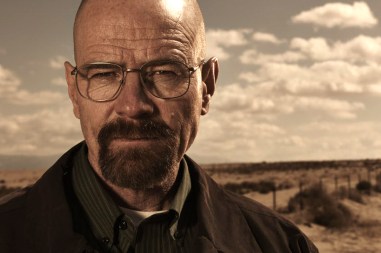
That’s it. Apply it to any modern movie and you’ll find that it works. What about a story about a family man who alienates his friends and family in the pursuit of power at the cost of societal decay?

breaking-bad-hair-art
Tragedy. That one was easy.

What about the story of a guy too cool for school that has to go back to school and falls in with a group of lovable ragamuffins?

community-season-six-yahoo
Also easy. C’mon, it’s in the title.

Dan Harmon is the premiere television comedy writer of the decade(s), having championed Community (above) and half of Rick and Morty. Here are his rules of writing every episode of anything ever:

  1.  A character is in a zone of comfort,
  2.  But they want something.
  3.  They enter an unfamiliar situation,
  4.  Adapt to it,
  5.  Get what they wanted,
  6.  Pay a heavy price for it,
  7.  Then return to their familiar situation,
  8.  Having changed.

When you think of the Shakespearean definition of comedy, you see why this works so well episodically, especially with the Community series in which the zone of comfort is literally being accepted by a society. You have the tragic turn of an insider becoming an outsider, and then the comedic reintegration in a linear progression.

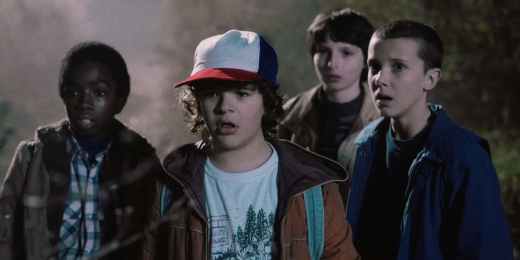
Sometimes you have comedies and tragedies playing out in parallel– take the story of a weird girl with psychic powers becoming best friends with a bunch of adorable dorks (integration) searching for their missing dork friend (broad integration):

stranger-things-on-netflix
Exploding G-men brains: comedy gold

…and mix it with the story of a sweet girl hanging out with a bunch of cool kids (integration) who drink beer and have sex and pay no consequences whatsoever.

barb-stranger-things-shannon-purser_article_story_large-large_transsfxwnnhossudzbpg8a9lxgnplncb4jbmotpfyxdp7d8
Oh right.

The tragedy of Stranger Things lies in the alienation of Barb– the cost Nancy pays to trade up into a higher in-group. You can chart out a hell of a whole lot of micro comedies and tragedies in that show and you’d still be hard pressed to label it solidly in either camp. Because it’s rooted in horror.  More on that later.

Now that we’ve covered the macro structures, let’s back up for a bit and examine the basis of all comedy so that we can cover the micro– I’m talking irony. The definition of irony is simply a contradiction of expectations. Now, the primary theory  of laughter is that it creates a social bond between those in a group, signaling that theirs is a safe place. I think of why I laugh nervously– to tell others that I’m not dangerous (or sometimes to awkwardly attempt to make a tense scenario a more amicable one). So let’s blend that with a model that explains why irony is funny to us on an evolutionary level:

A group of hunters are walking through the woods looking for food to kill. They hear some grass moving violently and they think it’s a tiger waiting to pounce on them. They send Kevin, agreed to be the biggest asshole of their group, to go and check it out– Kevin looks in the grass and finds… nothing. It was just the wind. He laughs to the other hunters to nonverbally communicate that everything is fine and they laugh back to confirm everything is indeed fine.

If you dissect that, you essentially have, in my terms:

  1. Set up (We’re hunting!)
  2. Expectation (Kevin’s gonna get et!)
  3. Punchline: A contradiction of that expectation (It was wind all along! We’re safe!)
  4. Return to normalcy (Hahaha! We’re hunting!)

That’s the basis of every joke ever written. You’ll notice it’s almost impossible not to tell a joke without telling a story and that it’s elements are not unlike any other particular scene.

I tend to write humorous books. Here’s the first paragraph of the 9th chapter of The Fish Fox Boys in which our heroes enter a dilapidated mall after the decline of civilization:

Adam and Fred walked carefully through The Mall’s vast, moss-covered corridors, past windows of the storefronts and restaurants that were now strangled by vines and shattered by trees growing through the glass. At first they were startled by what they thought were several people frozen in time, until upon closer inspection, they discovered that these were simply what the old world had called “mannequins.” Fascinated, they poked and prodded a mannequin sporting capri pants and a vest.

Without really thinking about it, I had written through those four steps:

  1. Set up (We’re walking through a scary old mall!)
  2. Expectation (There are frozen people!)
  3. Punchline: A contradiction of that expectation (Oh, those are just giant dolls wearing clothes! We’re safe!)
  4. Return to normalcy (Hahaha! Let’s poke ’em! We’re farting around in a scary old mall!)

A lot of that humor has to do with irreverent tone and pointing out absurdity, but the tone doesn’t become irreverent and the absurd isn’t examined until the end of the paragraph. And I’m going to posit that #4 is where the true humor lies (Let’s poke ’em!), instead of the punchline (Just mannequins!). If you think about how Mitch Hedberg delivers jokes, the laughter is almost always a beat after he says the punchline and comments how dumb his jokes are which also serves to recenter the audience before his next joke. You also have TV comedies like The Office where the punchline is delivered followed by a talking-head shot to capture the more human, often funnier reaction to the punchline (which also contextualizes the audience to the true nature of the characters on screen). The last step is even the funniest in the hunter-tiger model which tells the universal truth that laughter is contagious. You don’t need a joke to make people laugh, you just need laughter.

Back to horror (you thought I forgot! Shame on you!). A while ago, I had to the opportunity to see Robert Brockway read from the second installment of his brutal and genius punk-rock-horror series, The Vicious Circuit, and during the Q&A, a woman asked him how he could take subject matter that’s so inherently foul and horrific and still make it so goddamned hilarious. His answer was that the set up of a joke and the set up of horror is almost exactly the same, just with a different outcome. To use the hunter-tiger model again, there could have just as easily been a tiger waiting in those bushes to eviscerate Kevin. And writers like Brockway prove that the other hunters can still laugh at the end.

In my paragraph from The Fish Fox Boys, the punchline could have been replaced with a horrific payoff– that the people frozen in time were exactly that, stiff inanimate bodies standing around. Again, I think, what counts is the #4 Return to Normalcy (and how you define normalcy in your work). Fred and Adam could have screamed and runaway… or they could still poke the bodies and make fun of their clothing.

It makes a lot of sense to me, that laughter is so closely related to fear. We know that it’s the social cue of safety and the release of anxiety. It’s one of the reasons why going to a standup comedy show feels almost like a more powerful religious experience for me– the catharsis of that internal anxiety being coaxed out by a charismatic comedian and diminished by a room full of other homo sapiens telling each other nonverbally that everything’s fine. But that initial anxiety is necessary. You ever have to switch a sitcom off because it made you feel too anxious? Because you inadvertently mumbled, “Oh God”? Exactly. What makes us feel uncomfortable is also what makes us laugh. As a sidenote, I think that’s why slapstick was/is so popular. (See Buster Keaton’s House Falling on Buster Keaton)

It’s on that anxious axis that all  stories swivel.

But don’t forget that laughter is also the language of play and, whether you’re torquing the tension of a horror or a thriller piece or polishing the jokes and tone of a humorous work, remember that there’s a lot to play with here using the simple mechanics. And if you ain’t hip to this writing scheme, then, well, do what makes you laugh.

Unless that includes, you know, doing real-life horror stuff. GET THOSE KITTENS OUT OF THAT BURLAP SACK, KEVIN.


*I’m pretty sure that Shakespeare himself didn’t actually make those distinctions and that definition likely precedes the bad bard by some hundreds of years.

Actively Engaging Media

Actively Engaging Media

I’ll never understand people who don’t read. That’s not true. I’ll never understand people who passively ingest media. Thems the kind that just let the TV happen at ’em.

You’ve probably heard it said a good writer is a great reader. It’s an alright adage, despite having been repeated to the point of redundancy–and with good reason. Because whatever mechanism that drives human ambition is blind to the amount of work that goes into a piece of working literature. You may keep meeting the people that want to write a book who don’t read any books. You may keep running into people who call themselves writers who don’t actually produce anything. But if you meet a writer who does produce and doesn’t read? I don’t know, write their teachers from high school and inform them how much of a disappointment their students have become. The point is that this writing schtick takes work and that work primarily consists of reading a butt load. If you don’t like reading, then, Jesus, dude I don’t know why you’re here. But if you’ve been putting reading books on the backburner, remind yourself that it’s as much work as it is play and crack that sucker open.

So rejoice, all ye wordsmiths, for yer work be entertaining and usually pretty fun. Reading is a good time and don’t forget to enjoy it. But lets take it a step further. I’ve mentioned a couple of times on this blog about the worth of analyzing films and video games.  I want to ruminate a little further on that, such that that in addition to becoming great readers, we also become great purveyors of art of all kinds. So maybe don’t take off your writing lenses when you treat yourself to a Netflix binge or video game marathon.

The good news is that you were probably going to watch movies and television shows anyway. The challenge is sussing out a lesson in works that exist for us to disappear into– and feel free to become absorbed into a film, that means the storytellers are doing something right. It’s up to you, however, to figure out why it was so effective in ensnaring your attention.

We’re all brothers and sisters in this world of storytelling and there’s a lot to be learned from analyzing other mediums. Think critically of how a film is shot–think of the technical nightmare it takes to pull off a scene like this. This is important to pay attention to because, to dust off another overused adage, “Writing is like directing a movie in someone else’s mind.”

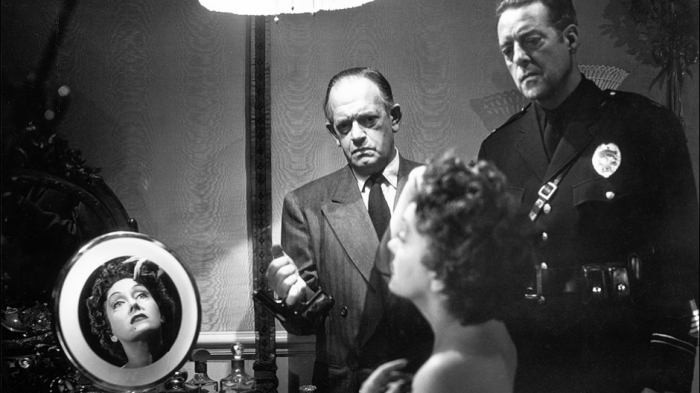
Think about how a single frame can tell a story by its composition:

paramount_940x529_v220-20banner_28
Sunset Boulevard (1950)


By this screen grab alone, you see evidence of Norma’s vanity (the mirror), her break from reality (as she’s not even looking at herself, or the police in the mirror but somewhere far away) . You understand the severity of the situation– there’s been a murder (gun being held as evidence) and Norma’s suspect (police. duh.). And as far as tone goes? An unsettling clash of dark darks and bright lights.

How would you write this scene in a book? How would you write it in a short story? A poem? A song? You’d write it differently for each, I’m sure, because you aren’t half-assing this. Do you get a different feeling from the writing? How so? What details are you leaving in? Out? Why? What changes? Asking ourselves a lot of questions helps to understand the choices being made in other’s work and asking the same question of our own work leads to bigger realizations and (ideally) a clearer focus of what we’re trying to achieve.

So we’re paying attention now, effectively “reading” all forms of art. But where to start? What does a balanced media diet look like? You already know what you like to read, right? Start there and keep at it. And if you find yourself merely entertained and reamin unchallenged, hit up a booklist and maybe pick up one or two of those the next time you’re strolling past your book store. Film? How many of IMDB’s top 250 have you viewed?  Read analyses of film, film, video games. (Hell, I watch hour long videos summarizing Final Fantasy plot lines, because I remember being moved by them as a kid and want to identify the successful elements those stories hit upon.) Read The AV Club after your favorite episode of whatever airs and get your brain juices flowing.

We live in an age when criticism outnumbers content 1000:1 and there’s a lot of content out there. Identifying the useful, educational criticism should help cultivate storytelling instincts and give you the tools and vocabulary to dissect your own stories and see what’s working and what is not.

Read. Watch. Listen. Read.

And don’t forget to write.

Unveiling the Illusion: Noir Nerdin’

Unveiling the Illusion: Noir Nerdin’

Spoiler alert up top: I’m going to delve into Chinatown, LA Confidential and True Detective. If you have any interest in being surprised by those works, you might want to stop reading now.

I’ve heard it around the way that a successful Sci Fi or Fantasy book reveals its built up world gradually through the fresh eyes of the main protagonist. I got to thinking that maybe noir does the same thing, except in reverse– we’re introduced to a fantasy and then what follows is the revelation of our very own dark and gritty universe (usually) through the eyes of the protagonist who can see the true, underlying reality.

In my post on character sketching, I quoted Raymond Chandler’s bit on Phillip Marlowe. The relevant piece is this:

The story is this man’s adventure in search of a hidden truth

That’s not breaking any minds to tell you that The Detective archetype is searching for some veritas in noir detective fiction. But I want to pause first on why these guys feel the need to pursue that hidden truth, or rather, what makes them the type of character that knows something is there.

Sherlock Holmes is a good place to start. He solves crimes by deductive/inductive reasoning. He looks at something from above and in the solving of the case, elevates the crime to his own level. He’s simply smarter than the crime.

But noir heroes slum along the bottom. The Noir Detective yanks down the case to his level. Because his world is the truthful one and the illusion spun by the conspiracy of his social betters doesn’t sit well with the reasoning of the cynical world.

In the first season of True Detective, Rust Cohle has been through the hell of losing a child and living deep undercover for years, well acquainting him with the pain of living and how the criminal world operates. When he transitions into a homicide detective, he’s aware that the structures in place are illusory– he can sniff corruption on his fellow police and the investigation is being misdirected by an invisible hand. Cohle also extends this to the broader subject of the world:

“It’s all one ghetto, man, giant gutter in outer space.”

Rust works outside of the agreed upon societal norms, because he outright rejects them as an illusion. He rejects authority, he rejects human relationships, he rejects society. Which is what makes his and Marty Hart’s relationship so powerful– Marty is discovering that his suburban American dream is ultimately immaterial, realized in the bitter disintegration of his marriage and the troubling sexual pressures his daughters encounter. And he’s ultimately powerless to stop it (owing to his own sexual infidelities, alcoholism, and heavy handed parenting methods). It’s only when Marty is dragged to the bottom, to the world of harsh truths where Cohle is waiting for him, that they are able to finally solve the murders.

The mechanism of noir is the progression of interviews and interrogations. In there lies the fabric of the illusion– everyone provides deceitful information to obfuscate the truth. Let’s take a look at Chinatown in which Jake Gittes (a veteran of the harsh realities in Chinatown) is approached by Evelyn Mulwray who turns out to a be an actor. The water department covers its tracks of diverting irrigation to the orange groves. Hollis Mulwray is found drowned in freshwater, but had salt water in his lungs. Katherine Mulwray is supposedly Hollis’s mistress, before it’s revealed that she is Evelyn’s sister before [redacted]. Everything seems to be positioned in such a way that it seems normal at first glance. By the end of the film, every threaded lie is unspun and what remains is a sinister and grim reality dressed up as a caper. In other words, it’s still Chinatown where base crimes are the norm and it turns out that the rest of LA is no different. Again, normalcy is the fantasy.

Also, how good is it that Gittes gets his nose sliced up, metaphorically making him an impotent detective coinciding with him unable to decipher the pageantry in front of him? Pretty sweet.

There’s a lot to play with here and a good example of flipping this script is James Elroy’s LA Quartet. If you think about the main characters driving the novels, they are actually somewhat naive and too obsessed with outperforming their peers to realize the fallacy the of the criminal justice system they participate in. Perhaps because of this, they are often casualties of their own investigations, one way or another. Meanwhile, the common thread through all of these stories is the ever terrifying Dudley Smith, a man who understands the dark reality of crime and departmental (even federal) corruption. Instead of being a The Noir Hero, he chooses to perpetuate (and occasionally even create) the illusion to benefit himself financially and further his career. I can’t think of a better noir villain than Dudley.

At the end of the day what you have is a character interacting with the setting. Interacting is the operating word. I feel as if many books in various genres offer a passive protagonist who allows the world to happen at them. What I appreciate about noir is that the protagonist digs his hands into the guts of the setting and shows the reader its entrails and shouts, “THIS! THIS IS WHAT WE’RE MADE OF.”

Perhaps there’s a lesson in that for all of us.


If you’re a fan of noir mysteries, perhaps try my hardboiled detective novel, Muddy Sunset. It follows PI Roy DeLon through the streets of St. Louis 1955 as he untangles a web of MS_cover_smallcorporate deceit, murder, and treason. You know, casual stuff. It’s available in paperback and kindle formats here.

Routine: more Art than Science

Routine: more Art than Science

I’ve been trying to get on a consistent writing routine and almost every author who gives writing advice provides the simple maxim, “Write Everyday.”

I’d like to add the caveat, “…except when you don’t.”

Days and weeks are busy. If you, like me, work a joe job schlepping for the man, then you’ve got to take care of the time you have with some delicacy. You need to unwind, you need to eat, you need to be (occasionally) social, you need to  read and ingest other forms of media (which is half of what this writing gig’s about). And you need to write.

I myself have been trying to hit a quota of at least four times a week. In my more frantic pushes to finish projects, I’d set aside 4-6 hours at night of non-stop writing action. The results were very productive– I’d get over 20,000 words a week. That’s not always possible but what I learned from that is that it helps to anchor your routine to rituals. My rituals were:

  1. Brew a pot of coffee at 6 PM
  2. Drink coffee, start project, catch up with Twitter
  3. Get a burrito between 7-8 PM
  4. Eat burrito while writing
  5. Brew decaf pot of coffee, see what’s happening on Twitter
  6. Get zoned in on writing until 12:30 AM

It’s probably not the most feasible schedule ever written– I’m not entirely sure I can write off burritos for tax purposes– but that framework of regularity took care of life’s stressful little details such that I could focus on the work. If I got lost along the way, I knew how to click back into the groove (“Oh, I haven’t brewed the decaf yet. I’m on it.”). I also knew when I was going to stop (which is sometimes more of a suggestion if the writing’s hot).

You’ll also notice that I included farting around on social media into the routine. I feel like it’s necessary to distract yourself a little bit to keep the gears in your head properly oiled. Writing emails, chatting a buddy on Facebook, Tweeting, these are all ways to exercise the writing component of your mind, while also exorcising certain ideas that have no place in your fiction (e.g. if I have a joke that’s inappropriate for the book I’m working on, I’ll throw it on Twitter or simply just send it to a friend, instead of trying to jam it crudely into some prose).

These days I’m allowing a little more time to finish projects, I find myself asking myself the question of setting up a word count quota. How much should I get down?  I’ve used quotas in the past and they can be incredibly helpful. In fact, I still use them but I’ve ratcheted it down to ~400 words per session instead of 1,200.

Because I think the more important thing to set up is the time allotted to write instead of a hard number to hit. You ever read a listicle that tried so hard to hit the word count that it strung a sentence along twice the length it needed to be? There are tales of NaNoWriMo cheating their word counts in all sorts of ways– and it misses the point. If you set up a beginning time and a finishing time, you’ll hit your quota. You’ll exceed it beyond your wildest speculations.

I still haven’t created a perfect schedule and I’m still tweaking what works. There are the days where I just squeak by with the minimum 400 and then there are days when I can’t stop and I’ve got 20 more pages compiled. And maybe that’s just what works for me– like a runner training for the big marathon.

So, if this entry has a point it’s this: The big push will yield a big pay off, but so will the accumulation of regular sprints. You just need to make the time.

If you’ve got suggestions, hey, lemme know.

Anti-Intellectualism and The Case AGAINST Mediocrity

Anti-Intellectualism and The Case AGAINST Mediocrity

In one of my previous entries I wrote about how mediocrity can be inspiring– in the sense that it can fill you with the confidence to at least match the quality. At the hazard of contradicting myself, today I am going to beg you to make your content as good as humanly possible. 

Media causes ripple effects in society. I’m not an alarmist about how millennials are getting lazier and dumber by the second because on the whole, I believe that to be patently untrue and anyone who tells you otherwise is trying to get you to vote for somebody. But I do recognize that during this transitional period of how we ingest our media, it tends to be indulgent (I’m not judging. I watched Stranger Things in a single day) and since our media has (ironically or no) saturated nearly every second of our lives, it’s important to check the diet of what we’re consuming.

The recent presidential debate was entertaining as hell. I know I had a good time on Twitter. But the fact that it’s become entertainment is a little disconcerting. On one hand, it’s getting people involved with politics. On the other, people are examining the performances of the candidates instead of the policies they’re proposing. I think our media has a lot to do with that–to compete with Game of Thrones, the presidential debate had to be a bit of a shit show.

As content creators, we have an opportunity (I want to say responsibility, but that’s a troublesome word) to engage our readers with critical thinking. That can be hard to juggle with the “entertainment value” of what we’re trying to create. I totally understand if you’re coming at it from the angle, “I’m an entertainer, I just want to help people unwind and escape their problems for a little while.” And that’s noble in and of itself. But what’s gained there if that’s all there is to it?

We live in a day and age where we hide in our bedrooms and watch Netflix until our eyes bleed. We play (awesome) video games that average to over 100 hours of playing time. We stare into our phones to avoid the awkward eye contact one might accidentally exchange on the bus. We indulge a lot of escapism. And sometimes that’s what we need. Feel no shame for escapism.

Perhaps feel some shame to what you’re escaping into, if there’s no merit in it. I know, I know, one can wax poetically and existentially on the Godawful Friday by Rebecca Black. You can create meaning in things that are otherwise devoid of any inherent value. And I will defend the honor of dumb action and horror movies until the end of time– is there any real lesson in The Friday the 13th franchise? Did I learn anything from A Nightmare on Elmstreet? Perhaps, but then again, maybe I’m projecting meaning onto those films, instead of gleaning any actual truth. They’re fun, but they aren’t challenging in any way. The same reason people like me dissect pop culture philosophically, is why kids often act out in school–they aren’t being challenged. 

That’s the word of the day right there: Challenging. I look to Jurassic Park as the perfect example. As a movie, it’s thematically perfect. It’s entertaining, it’s scary, it’s satisfying in the triumphant ending. And it also challenges the audience on issues of the role of mankind in the natural world, a challenge that is becoming more and more relevant. It also challenges gender roles, and asks the question frequently, “What does it mean to be a good parent?” Those questions vary in subtlety and are never preachy except for one siiiick example. You can walk away from that movie, fully entertained and unaware that the film was poking at those issues and still have those questions brewing in the back of your mind. And the book? Wonderfully dense with a lot of science jargon that adds another layer of complexity to decode to keep up with the pace of the story.

I don’t want to disparage other authors out there, or some of the incredible entertainment that’s been coming out. But I’ve seen the depths of what independent publishing can produce and people have purchased and consumed terrible, haphazardly written products in this brave new world of publishing. Not only are those books a scam (which hurts all of us, as a reader burned by an indie will be less willing to buy a book by another) it also stokes the fires of ignorance. We need to hold ourselves and each other accountable for the content we create, be it social media, blog posts (ahem), the books, songs, and films we write. It needs to challenge us first, make us ask ourselves the hard questions before asking the audience to consider our musings.  It’s important to remember that we aren’t just a product of the world we live in, we actively create it.

So let’s work on creating smart entertainment.

I’m not saying you have to be ambitious. I’m not saying you need to remove the wool from the eyes of masses and expose them to some forgotten truth about the world. I’m just asking as a fellow writer to try and instill a sense of purpose in your work, because that’s what’s going to resonate the most with the readership.

That and fart jokes.

Whatchu Know?

Whatchu Know?

The most hated question in interviews and Q & As with authors is probably “Where do you get your ideas?” Because the answer is almost always either a contemptuous shrug or the clichéd “From the world I live in.”

It’s kind of funny, because the latter is what writers are taught early in their career with the tired adage, “Write what you know.”

I think there are times when writers mistake that advice for “Write about my life.” There was an older woman in one of my fiction courses who wrote a really personal story about the day her ex-husband was released from jail. It was a deeply moving story… or it would have been, if it had been properly constructed. But when criticized, the writer took it personally, going as far as quitting the class then and there.

I think the danger is, when you transcribe your personal life into a fictional setting, is that you want the details to match up with your own memory. This doesn’t always fit the story and making the concessions to make it fit damages your own memory of events. Save that memory for yourself. If it’s funny, save it for parties. If it’s tragic, save it for therapy. This is you we’re talking about here. Keep yourself whole and don’t exploit your life for a chapter in a book.

Fiction isn’t a diary. It can be hard to remove your personal stake from a piece of fiction during the editing process. When it comes time to “kill your darlings,” and those darlings are “factual events that happened to you,” you will find yourself in a bit of a quandary.

“But how do I write what I know?”

My advice (which is probably advice given to me that I am repurposing here for your pleasure) would be to start recording how you interface with the world around you–going back to the answer up top on “how I get my ideas.”

Your friend is talking. How are they talking? Are they sad, happy, neutral, bored? I’m cooking dinner. I feel ____ when I cook, because ____. This rock that I’m holding is crumbly. It reminds me of _____. It’s windy right now. People are walking ____ in reaction to it.

A personal example of this is when I wrote a scene in which the main character is gifted pickled herring. A friend who read the chapter’s only statement on the chapter was “How the #$%@ do you know what pickled herring is?”

And the answer to that is I had pickled herring on saltines with my grandmother years ago and it seemed like a thing that old neighbors would gladly gift someone, and the kind of gift that you’d be thankful for, but not particularly excited about.

I used a memory from my own life, took out the detail I wanted, figured out why I thought it worked and wove that into the story I was writing… without writing the scene between me and my grandma.

I’ll have more thoughts on this later (I have more thoughts on everything all the time).


Character Sketching: Dungeons & Dating Websites

Character Sketching: Dungeons & Dating Websites

The first book I wrote (that has still gone unpublished, a-boo-hoo) came from the desire to summon a character into literary being that was so chaotic and anti-authoritarian (yet ultimately harmless) that he would rip through whatever situation I placed him in and get me to a finished manuscript. He did. Over the course of 50,000 words I got to know the guy. Then I threw 90% of the book away and started over (as is the fate of first drafts of first books), this time with more intimate knowledge of my character. I started with a concept and ran it through a machine of events and conflict. Ding! A character was born.

So as not to waste that much time and paper, however, character profiles and sketches were invented to save the author some hassle. It’s helpful to have a reference for all of the dramatis personae flying around a story. I agree. I have a hunch, however, that a lot of profiles focus on the character’s appearance (which usually translates to dry prose when described over and over…) or their general backstory (which can be interesting, if you go into one or two character’s histories in a novel, but quickly turns into a slog).

Writing a character profile is difficult, I think, because it’s hard to describe ourselves. You lovebirds on OKCupid know what I’m talking about– when there’s a gun up to your head to describe yourself, you end up talking about the music you like, the hobbies you enjoy, and how invested you are in your career. Vague. Which isn’t always a bad thing.

It’s better than, “Hi! I’m Dina! I’m 5’7″ I wear black eyeliner and leather boots with black jackets with pink buttons with little butts engraved in the copper and when I was growing up in an orphanage by the dragon lagoon, I found a pendant that farted when I prayed to it…”

It’s even harder to describe other people. Enjoy this familiar scene I have prepared for you:

“Tell me about Steve.”
“He’s funny.”
“Oh?”
“And smart.”
“I bet he’s shy, as well.”
“He is a little bit shy, but really fun once you get to know him.”

Uncanny, right?

Now here’s the Godfather of noir, Raymond Chandler, describing Phillip Marlowe:

“down these mean streets a man must go who is not himself mean, who is neither tarnished nor afraid. He is the hero; he is everything. He must be a complete man and a common man and yet an unusual man. He must be, to use a rather weathered phrase, a man of honor—by instinct, by inevitability, without thought of it, and certainly without saying it. He must be the best man in his world and a good enough man for any world.

“He will take no man’s money dishonestly and no man’s insolence without a due and dispassionate revenge. He is a lonely man and his pride is that you will treat him as a proud man or be very sorry you ever saw him.

“The story is this man’s adventure in search of a hidden truth, and it would be no adventure if it did not happen to a man fit for adventure. If there were enough like him, the world would be a very safe place to live in, without becoming too dull to be worth living in.”

Damn, right? Here’s a few takeaways: Chandler is focusing on values. On basic motivations. On attitude. He knows how Marlowe is going to handle any situation, before he knows what the situation is. That kind of confidence is what can allow you to improvise.

Let’s say you write a scene in which your hero is fleeing a kill-squad of robots, only to run into her evil twin brother, wielding a machete. BAM. Writer’s block. You flip to your character sketch. It says, “She has a sick belt buckle.” Oh no! You keep reading. “She’s really funny.” That could come in handy later, but is currently useless. “Highly aggressive and brutally violent to a fault.” Phew, you exhale, wiping perspiration off of your brow. Now you know that you hero would kick her brother in the chest, grab the machete and start swinging wildly at robots until they overwhelm and imprison her for robot crimes.

Bad example, but you get the idea.

So how about this? Spend some time making character profiles (even with your currently written ones) and identify some key characteristics.

  • “What is their general attitude?”
  • “How do they respond to conflict?”
  • “What is their way of speaking?”
  • “What do they find despicable?”
  • “What do they believe in?”
  • “How sick is their belt buckle?”
  • “What can break them?”

Once you have the answers to this, or a list of rules that summarizes those values, you should have a pretty keen mental shorthand of your character’s behavior in addition to a concrete reference.

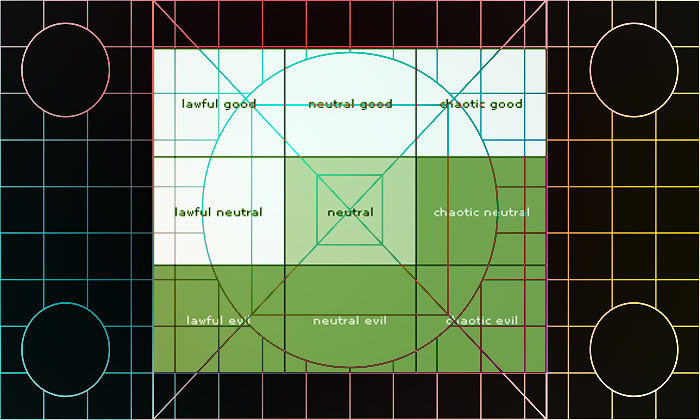
And hey, while you’re rolling your character’s stats, you might as well take another page from Dungeons and Dragons and try using the alignment spectrum and decide where you character falls and why. Want to use archetypes? Consult the enneagram which offers motivations behind archetypal behaviors.

Tired of writing? That’s cool, too.

Take a break and get to know thyself.


The Power of Mediocrity

The Power of Mediocrity

Here’s an exercise you can do the next time you go to the bookstore: research your favorite writer’s whole catalogue and figure out their worst book.

Go buy that book. Read it. Cringe through it. Note its virtues.

Now ask yourself if you can produce something at least as good as this. Chances are that you can.

With Self-Publishing allowing for anyone to enter the arena of fiction writing, there are no standards in place that would prohibit inferior works from reaching readers. Books are often error-laden and stiffly, quickly-written and lean more on heavy marketing than quality of the product. I’d advise that you be honest when reviewing their work– or if they ask for a review, be polite and decline.

But also note that you can publish something better than this. You can correct the market quality by the taking the time and thoughtful care to go over your book many times. Have friends and family review them with you if you can’t afford an editor. (I can’t. And errors keep popping up even years later.)

Make it the best damn thing it can be because even if it doesn’t make a lot of money, it can outpace at least half what’s out there, or, at the very, very least, it can’t do worse.

And that’s still a success.